Astrology
Western Astrology: The Natal Chart
Western astrology turns your birth time and place into a natal chart of planets, signs and houses. A short, plain guide.
中文 →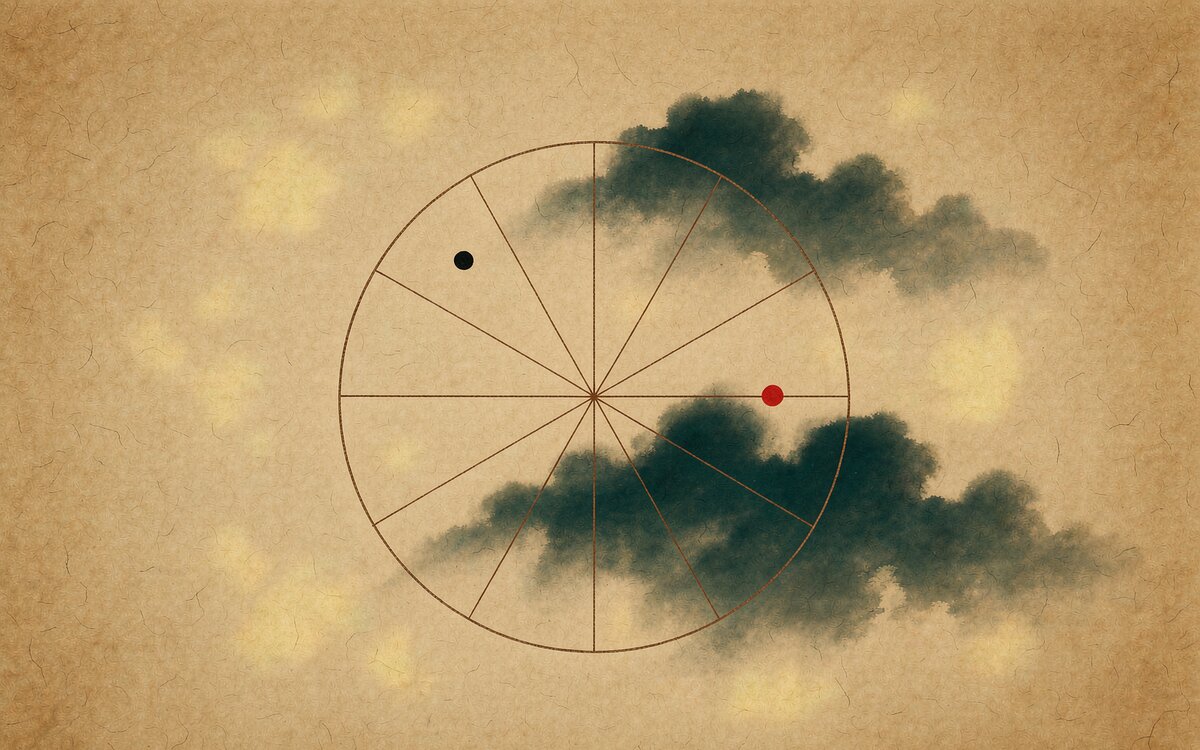
Western astrology starts from a simple fact: at the moment and place you were born, the sky looked a certain way. Plot that sky on a circle divided into twelve houses and you get a natal chart — a snapshot of where the Sun, Moon and planets sat in the twelve signs.
Three moving parts
A chart has planets (what is being expressed), signs (how that energy is coloured), and houses (which area of life it touches). The angles between planets — called aspects — describe relationships: easy flows and tense angles alike.
How it differs from Chinese systems
Where BaZi and Zi Wei read time through stems, branches and stars of a different tradition, Western astrology works with the visible planetary positions of a given calendar moment. They are separate languages about similar human questions.
How we handle it
We write astrology as an original personal interpretation. We do not reproduce copyrighted translations of older texts; everything here is generated for you on a curated knowledge base.
For entertainment and self-reflection only. Not medical, psychological, legal or financial advice.
More to read
What Is BaZi (Four Pillars of Destiny)?
BaZi maps your birth moment into eight characters of heaven and earth branches. Here is what it actually describes — and what it does not.
Zi Wei Dou Shu: The Purple Star Chart
Zi Wei Dou Shu plots your life into twelve palaces and fourteen major stars. A look at how this Chinese star-chart system works.
Tarot Basics: 78 Cards as a Mirror
Tarot is a deck of 78 cards used for reflection and intuition. A plain introduction to what the cards are and how a reading works.